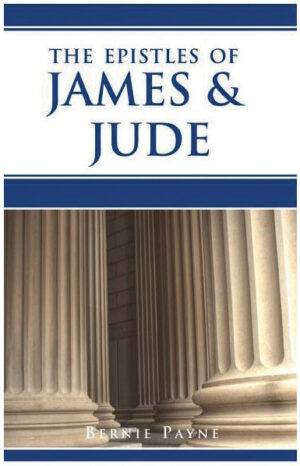
 Bernie Payne, The Epistles of James and Jude (N. Ireland, Scripture Teaching Library, 2024)
Reviewed by Ryan Coleman
Most local assemblies seek out teaching that successfully bridges the gap between abstract doctrine and the dusty roads of daily conduct. Bernie Payne’s commentary on The Epistles of James and Jude, published by Scripture Teaching Library, is a refreshing find in that ongoing search. In our own local Bible studies, this volume has proven to be an immensely practical companion, providing a clear, searching voice that resonates with the challenges of modern assembly life.
James: The Practice of Faith
Mr. Payne approaches the Epistle of James not as a theological puzzle, but as a manual for the “serving life.” He avoids the academic pitfalls of debating faith versus works in a vacuum, focusing instead on how the life of Christ is made visible in a believer. His outline provides a helpful roadmap for any Bible study:
- Faith’s trials experienced in patience – Wisdom: How God uses external pressure to produce internal maturity.
- Faith’s testimony expressed in patience – Works: Favoritism and the Law are replaced by practical faith.
- Faith’s temperance exhibited in propriety – Words: Self-control vs. a loose tongue as the barometer of spiritual wisdom.
- Faith’s truths examined in principle – Witnessing: Personal problems, divine promises and the Law vs. divine life.
- Faith’s triumphs expected in prayer – Waiting: The patient confidence of those laboring for the Lord in light of wealth, weariness and the wayward.
The embrace of Payne’s writing makes these challenges feel less like a lecture and more like a conversation with a seasoned brother alive with practical holiness.
Jude: The Protection of Faith
While James provides the ethics for the assembly, Jude provides the armor. Payne treats this short, urgent letter with the gravity it deserves, grounding the believer in the “faith once delivered.” His outline for Jude is particularly striking in its progression:
- Preserved from apostasy in Christ: Rooting our security in the Person of the Savior.
- The problem of apostasy: The vital distinction of contending for, rather than defending the faith.
- The result of past apostasy: Learning from the historical failures and sins of those who turned away.
- Present apostasy: Identifying the sure failure that follows the denial of Christ’s authority.
- Profile of apostasy: A sobering description of the useless, unsettled “spots” who disrupt the testimony.
- Power over apostasy: A triumphant conclusion on the One who keeps us from falling.
What makes this short volume so valuable for Bible study is its accessibility. Payne avoids unnecessary academic jargon, focusing instead on what the Spirit is saying to us today. Whether used for personal devotion or midweek study, this book serves as a faithful guide. It is highly recommended.
The book is available for purchase at ritchiechristianmedia.co.uk and gospelfolio.com.